UN Chief Calls for AI Firms to Disclose Environmental Footprint, Pledges Action to Hit 1.5°C Climate Goal
United Nations Secretary-General António Guterres issued a new call Tuesday for artificial intelligence companies to publicly release detailed data on the carbon pollution their operations generate, alongside full information on the water and land consumed to power AI infrastructure.
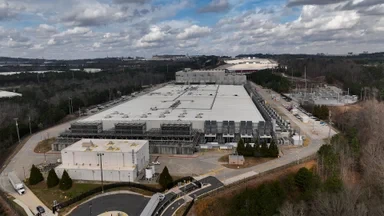
Speaking at London Climate Action Week, Guterres proposed the AI Environmental Transparency Initiative, arguing that AI developers have a binding responsibility to measure and publicly disclose the full environmental impact of their technology. Critics of unregulated AI expansion have long pointed to this harm as a core justification for reining in the rapid growth of AI data centers around the world.
Currently, both national governments and local authorities in regions that host AI-supporting data centers are ramping up pressure on tech firms to increase transparency and adopt standardized, industry-wide reporting rules for environmental impact. Guterres added that AI companies should also commit to powering all their facilities with electricity from renewable sources such as wind and solar by 2030.
“No more hidden costs,” Guterres said at Europe’s largest independent climate conference. “No more shifting the burden onto those least able to bear it. It is time to come clean.”
Many large tech corporations have already pledged to transition their operations to cleaner energy, with several targeting the end of this decade to meet that goal. Industry giants including Amazon and Google plan to hit this target primarily through expanded use of solar and nuclear energy. But the global race to deploy new, high-demand AI tools has complicated these existing commitments and driven a sharp rise in greenhouse gas emissions—pollutants released from burning coal, oil, and gas that warm the planet. Regulatory barriers have also slowed progress on building new climate-friendly energy projects to power expanding data center networks. According to the International Energy Agency, coal still supplies roughly 30% of the total electricity consumed by global data centers.
As AI expands rapidly, many observers including Guterres have highlighted the technology’s potential to accelerate climate solutions: it can boost energy efficiency across industries and cut overall pollution and emissions. At the same time, a UN report released earlier this month found the total environmental footprint of global data centers already rivals that of some of the world’s largest countries. That report also projected that the water use, energy consumption, and pollution tied to AI will double in just four years.
“Despite these obvious concerns, communities are often left in the dark about the environmental impact of the infrastructure rising around them,” Guterres said in his address.
The UN chief has long pushed for urgent global climate action, and he will once again convene world leaders at this year’s annual UN Climate Change Conference of the Parties, hosted this November in Turkey, to negotiate new collective action plans. Addressing AI’s environmental impact is just one of many critical steps required to keep global warming below the 1.5°C (2.7°F) threshold set by the 2015 Paris Agreement, Guterres noted. Last year marked the first time the global three-year average temperature crossed this guardrail.
“Every major emitter must accelerate action,” Guterres said. “And every country must overdeliver on its commitments.”
He called for steep cuts to methane, an extremely potent greenhouse gas responsible for roughly one-third of current global warming. While methane does not linger in the atmosphere as long as carbon dioxide, it is far more effective at trapping heat in the near term. Guterres also urged nations to reduce their overall dependence on coal, oil, and gas.
He did highlight positive progress in renewable energy, noting that scaled production has driven down technology costs even as global adoption climbs. Last year, growth in clean power generation—led largely by wind and solar—outpaced overall growth in global electricity demand. In 2025, the share of renewables in the global electricity mix surpassed one-third for the first time in modern history, while coal’s share of global generation fell below one-third.
But even with this progress, Guterres noted ongoing backsliding, including the United States under President Donald Trump’s renewed embrace of fossil fuels. He framed the current global climate moment as “A Tale of Two Crises,” a nod to Charles Dickens’ classic novel A Tale of Two Cities.
“For the climate agenda, this is indeed the best of times and the worst of times,” he said. “The worst—because climate impacts are intensifying, tipping points are looming, and the energy crisis has exposed the deep risks of dependence on fossil fuels. But also the best—because the renewables revolution is well underway.”
Alexa St. John is a climate reporter for the Associated Press. Follow her on X: @alexa_stjohn. Reach her at [email protected].
UN Chief Calls for AI Firms to Disclose Environmental Footprint, Pledges Action to Hit 1.5°C Climate Goal