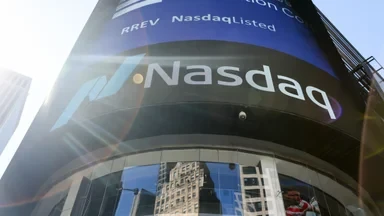
Sharp Global Sell-Off Hits Chip Stocks and Major Benchmarks, Analysts Dismiss AI Bubble Crash Fears
As of 9:45 a.m. Eastern Time on Tuesday, the Nasdaq Composite Index had fallen 475 points, a decline of nearly 2%, extending a 1.3% drop the index posted during Monday’s trading session.
Shares of leading global semiconductor manufacturers were down across the board, with many seeing far steeper losses than the broader market. The sell-off that first emerged on Monday gained significant momentum overnight, as Asian equity markets suffered heavy losses dragged down by plummeting memory chip share prices.
South Korea’s Kospi index — which has ranked as the world’s best-performing major benchmark since the start of 2025 — tumbled 10% in Tuesday trading, a drop sharp enough to trigger a 20-minute temporary halt to all trading. The Kospi’s steep decline was driven almost entirely by massive sell-offs of the country’s two largest chip giants: Samsung and SK Hynix, both of which saw their shares fall 12%.
This wave of market volatility spilled over into Europe, spooking regional investors and pulling down share prices for local semiconductor firms. Major European chip players including Switzerland’s STMicroelectronics, Germany’s Infineon, and Netherlands-based ASML all traded lower on Tuesday.
Even amid this broad cross-border sell-off, market analysts say they remain unconcerned about the overall fundamental health of global markets, and do not view the current downturn as the long-feared popping of the artificial intelligence investment bubble.
Andrew Slimmon, senior portfolio manager at Morgan Stanley Investment Management, laid out this perspective during an appearance on CNBC’s Squawk Box. “AI beneficiary companies have fully captured the zeitgeist among momentum traders right now,” Slimmon explained. “When that level of one-sided momentum builds, sharp sell-offs like the one we’re seeing today are inevitable. I’d argue this kind of correction is actually healthy for the market.”
Sharp Global Sell-Off Hits Chip Stocks and Major Benchmarks, Analysts Dismiss AI Bubble Crash Fears